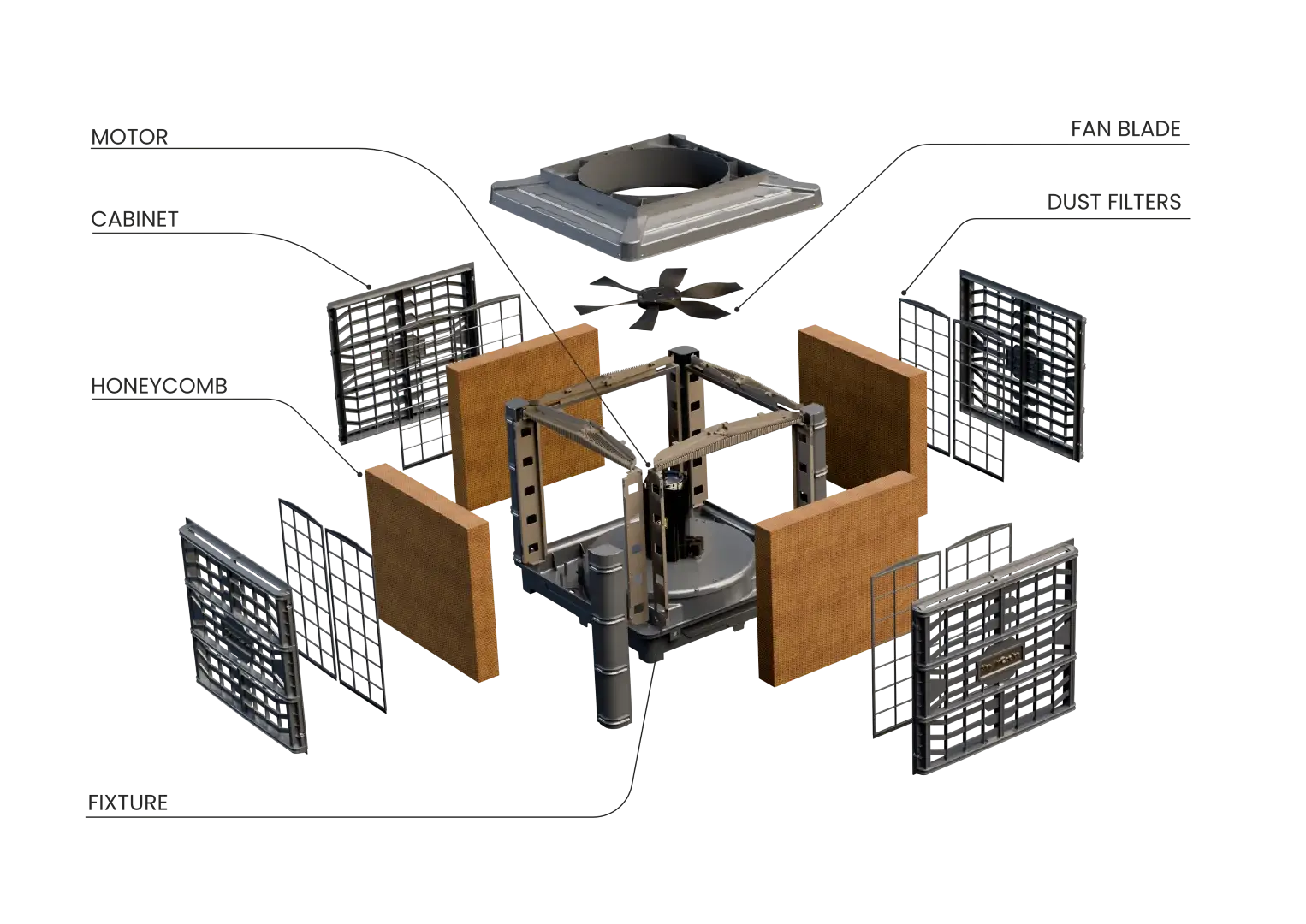
Energy Efficiency
Consumes significantly less electricity than conventional air conditioners - there is no compressor, only a fan and a small water pump.
A natural and energy-efficient solution for maintaining a cool and comfortable environment, especially in hot and dry climates.
Evaporative cooling technology is a natural and energy-efficient solution for maintaining a cool and comfortable environment, especially in hot and dry climates. It is the same effect you feel stepping out of water into a breeze - put to work at the scale of a factory floor.
The cooling medium is plain water. No chemical refrigerant is stored, compressed or vented anywhere in the system.
Air is replaced continuously rather than circulated round a closed loop, so it never goes stale.
The drier the incoming air, the more water it can take up - and the bigger the temperature drop you get.
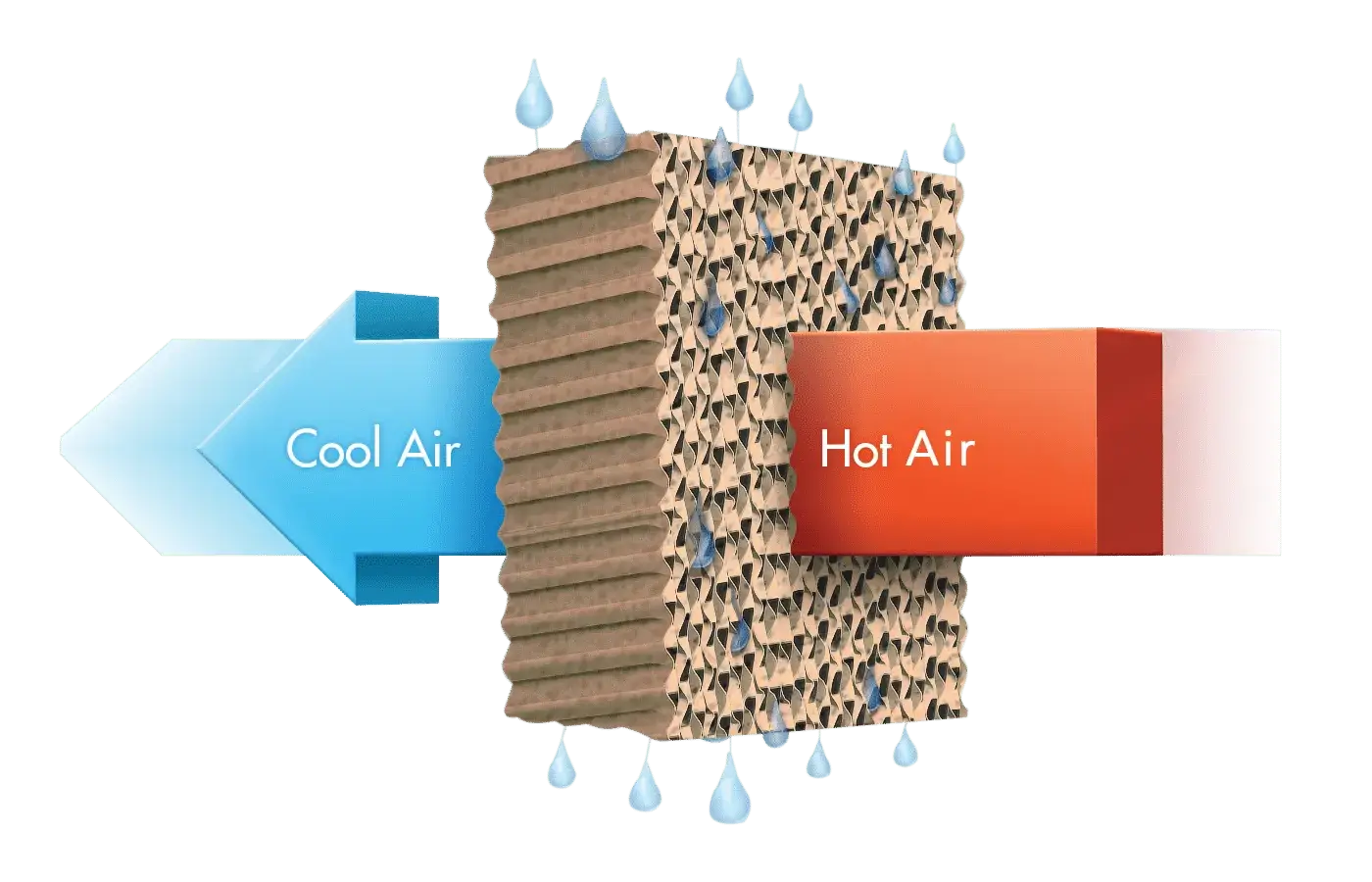
The system draws warm air through water-saturated cooling pads. As the hot air passes through, the water absorbs the heat, evaporates, and cools the air before it is circulated into the space. Unlike traditional air conditioners that rely on chemical refrigerants, this technology leverages water and airflow alone.
The blower pulls hot ambient air into the unit. Nothing is recirculated - every cycle starts with fresh outside air.
A pump keeps the honeycomb cooling pads wet, spreading the air thin across a very large wetted surface.
Evaporation takes energy, and that energy comes out of the air itself. The air leaves the pads measurably colder.
Filtered, cooled air is delivered into the building and the stale air is displaced out through doors, louvres and vents.
Five reasons it has become the default choice for industrial and commercial spaces across hot, dry regions.
Consumes significantly less electricity than conventional air conditioners - there is no compressor, only a fan and a small water pump.
Uses water as the cooling medium, eliminating the harmful refrigerants that conventional systems depend on.
Naturally humidifies and filters the air, removing dust and allergens as it passes through the wet pads.
Fewer moving parts and minimal maintenance requirements keep both the running and the upkeep cost down.
Effective in ventilated areas such as warehouses and factories - exactly where sealed air conditioning cannot work.
Anywhere heat builds up faster than a building can shed it.
Factories, workshops, foundries, textile mills and packaging floors where machine heat builds up through the shift.
Homes, terraces, patios and other semi-open living areas that stay comfortable without sealing the room.
Greenhouses, poultry and livestock sheds and produce storage, where steady ventilation matters as much as temperature.
Showrooms, restaurants, gyms, banquet halls and assembly spaces with high footfall and wide floor plates.
It is a sustainable solution that aligns with the growing demand for eco-conscious products - cooling large, ventilated spaces on a fraction of the power, without refrigerant gases, and keeping the air inside fresh rather than recycled.
Before anything is quoted the shed is mapped - airflow direction, cooler positions, duct runs and discharge points are drawn out, so you can see exactly what will be installed and where.